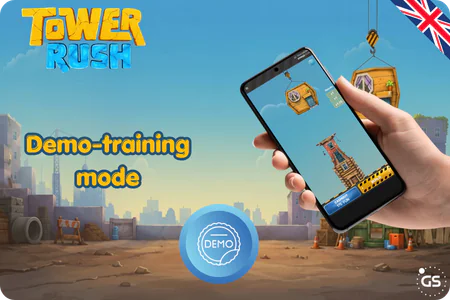
Before risking real money, visitors can try a free browser mode. They can study tower-building rules, multiplier changes and cash-out timing in Tower Rush without pressure. The practice version also helps users learn round pacing and controls. No registration, deposit or download is required.
What Is the Tower Rush Demo?
Before placing a stake, visitors can test the Tower Rush game demo with virtual funds. Each round follows the same tower-building logic, while practice credits remove financial risk. Users can study controls, multiplier changes and cash-out timing at their own pace.
- Virtual Balance: The free version uses practice credits instead of deposited pounds. Users can test different decisions without losing real funds. The balance resets when another session begins.
- Tower Growth: Every successful action adds another floor to the structure. Higher levels increase pressure and raise the possible return. Continuing always carries the risk of collapse.
- Rising Multiplier: The multiplier grows while the tower remains standing. It shows the current value of the virtual stake. Users can watch its movement before choosing their next action.
- Cash-Out Choice: A player may stop after any successful construction step. The current result then moves into the practice balance. Waiting longer may raise the return or end the round.
- Failed Build: One unsuccessful move stops the current attempt immediately. Any unclaimed virtual return from that round disappears. A new session starts with no financial loss.
- Strategy Testing: Users can compare cautious and aggressive approaches across repeated rounds. They may record cash-out points and review different outcomes. This helps reveal which method suits their preferred pace.
Unlike cash play, the free version cannot produce withdrawable winnings. It exists for learning and comparison, not income. The main difference concerns financial exposure. Practice losses cost nothing, while real stakes may reduce a deposited balance. Operator limits may also vary.
Play the Tower Rush Demo Without Registration
Visitors can begin in a browser without creating an account. The Tower Rush play demo uses virtual credits and lets them test each control. No deposit, identity check or app download is needed. This private trial keeps personal details outside the session.
Free play suits anyone who wants to learn before staking pounds. Users may repeat rounds, compare cash-out points and study multiplier changes. The risk-free format also helps them check device performance before opening a real-money account.
Who Should Try the Demo First?
Different users gain different value from free practice before staking pounds. Beginners can learn the controls and round structure without pressure. Experienced players may compare timing choices, while strategy testers can record repeated outcomes. Each group can focus on a separate goal.
| User type | Main benefit |
| Beginners | They learn floor building, multiplier movement, cash-out controls and round endings before using real funds. |
| Experienced players | They check the pace, special floors and timing choices without changing an existing bankroll. |
| Strategy testers | They repeat planned cash-out points, record outcomes and compare cautious or aggressive approaches. |
Newcomers usually benefit most because the format removes costly early mistakes. Regular users can still test new approaches before changing familiar habits. A strategy trial also works better across many rounds. One lucky result never proves that a method works reliably.
How the Tower Rush Demo Works
Players begin with virtual credits and select a practice stake before each round. The Tower Rush demo game then adds floors after every successful move. Each level raises the multiplier and presents a clear decision. Users may collect the shown amount or keep building.
- Virtual Stake: The round begins with practice credits rather than deposited pounds. Users select an amount and start construction. This value forms the base for every later multiplier change.
- First Floor: A successful action places another level on the structure. The tower then becomes taller, while the possible virtual return rises. Each new move carries fresh risk.
- Multiplier Growth: The displayed figure increases after every completed stage. It multiplies the selected practice amount. Higher values look attractive, but they never remove the chance of collapse.
- Cash-Out Point: Users may stop after a successful build and collect the current virtual result. Waiting can raise that figure. Though, another move may end the entire attempt.
- Tower Collapse: A failed construction step closes the round immediately. Any unclaimed practice return disappears from the session. The next attempt starts with a new virtual stake.
- Special Floors: Frozen Floor, Temple Floor and Triple Build can change a round’s flow. Their appearance may affect construction or rewards. Users can study each feature without financial pressure.
No cash-out pattern can remove the random result behind each construction step. Practice helps users study timing and risk tolerance. It cannot predict future rounds. The safest approach treats every new build as an independent decision.
Does the Demo Use the Same RTP as the Real Game?
The free version follows the same mathematical model as real-money play. Both modes use a 97% RTP and identical random outcomes. This shared setup means practice rounds reflect the same long-term return pattern. Virtual credits change the stake value, not the game logic.
| Demo mode | Real-money mode |
| Uses a 97% RTP | Uses a 97% RTP |
| Runs with virtual credits | Accepts stakes in pounds |
| Follows the same random model | Follows the same random model |
| Produces no withdrawable winnings | May produce withdrawable winnings |
Short sessions may still produce very different results. RTP describes many rounds, not a guaranteed return for one player. A small sample can include long wins or quick collapses. Demo results help with practice, but they cannot forecast future cash play. Each round remains independent.
How to Start Playing the Tower Rush Demo
Starting the free version should feel simple, even for first-time visitors. The Tower Rush demo works directly on the site through a modern browser. This browser-based format removes installation delays and keeps practice separate from real-money play.
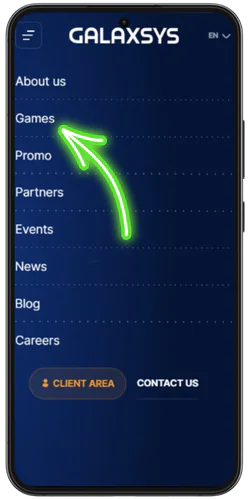
- Home page.
Go to the official website of the provider “Galaxsys” and click on the open site menu in the upper right corner.

- Select a section.
In the window that appears, find and click on the “Games” section.
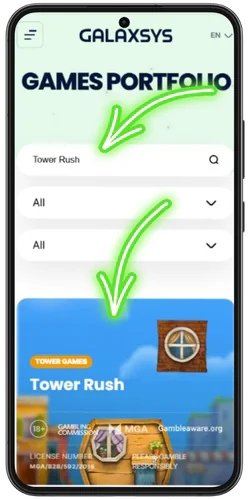
- Search menu.
A search menu has opened in front of you. Enter the name of the game here and select the game window at the bottom.
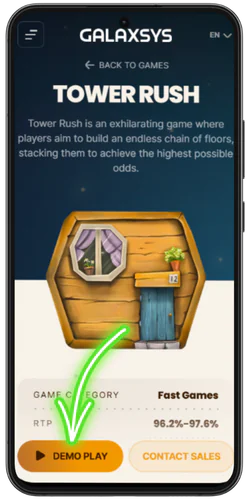
- Starting the demo game.
Now you have a short description of the game itself and a button to start the demo. Click “Demo Play” and get started.
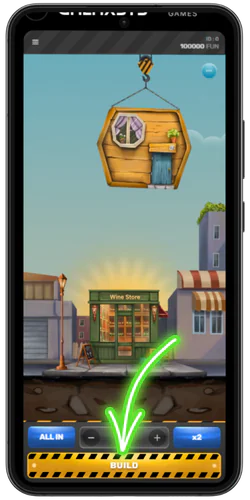
- Start of the game.
You’re now on the game’s main screen. The interface remains the same in both the demo and real-money versions. Here you can practice and test all your strategies. Good luck!
Once opened, the practice version gives users time to study the game at their pace. They can review controls, watch round behaviour and build confidence without financial pressure. This early practice helps them judge whether the format suits their preferences.
Tower Rush Demo vs Real Money Mode
Free practice and cash play share the same rules, RTP and random model. Their financial purpose differs sharply. One uses virtual credits, while the other accepts stakes in pounds. Each option suits a different stage of preparation.
| Demo mode | Real-money mode |
| Uses virtual credits with no monetary value | Uses deposited funds measured in pounds |
| Cannot produce withdrawable winnings | May produce winnings that meet withdrawal rules |
| Works well for learning controls and timing | Suits users prepared for financial risk |
| Usually starts without registration or a deposit | Usually requires an account, deposit and identity checks |
| Allows repeated testing without affecting personal funds | Every failed round reduces the funded balance |
| Helps compare strategies under relaxed conditions | Adds emotional pressure because each decision affects money |
Practice suits learning, testing and device checks before any deposit. Cash stakes bring possible withdrawals, but losses reduce the funded balance. A measured switch helps users keep expectations realistic. Demo results never guarantee later outcomes, even with identical mathematics.
Tips for Practising in the Tower Rush Demo
Before staking pounds, users can compare planned cash-out points through Tower Rush demo play. A fixed virtual budget creates useful limits for each session. Repeated rounds show how cautious and aggressive choices affect results. Personal funds remain untouched during every practice test.
- Fixed Practice Budget: Set a virtual amount before starting each session. Treat it like a real deposit measured in pounds. This rule shows how quickly repeated losses can reduce a limited bankroll.
- Planned Cash-Out Level: Choose a target multiplier before each round begins. Avoid changing that point after the tower rises. A fixed target makes later comparisons clearer and reduces emotional decisions.
- Separate Test Sessions: Use one approach during several rounds before trying another. Mixing methods makes results harder to compare. Separate sessions show how each choice behaves across different outcomes.
- Written Round Notes: Record the stake, chosen target and final result after every attempt. Short notes can reveal repeated habits. They also show whether decisions follow the original plan.
- Cautious First Tests: Begin with lower cash-out targets before testing riskier choices. Early exits help users learn the round pace. Higher targets can follow after the controls feel familiar.
- Firm Loss Limits: Decide when a practice session should end after several failed rounds. This habit prepares users for real-money limits. Continuing to chase losses can weaken bankroll control.
Practice records can show habits that one memorable round may hide. Users should review several sessions, not chase a single result. Real-money play still carries loss risk, so tested methods never guarantee profit. Firm limits should remain in place after switching modes.